
A drain clogs, you clear it, and a few weeks later it is slow again. If that sounds familiar, buildup left on the pipe walls may be the reason. A snake clears a path through a clog but can leave debris behind.
Two of the most common ways to clear a blocked drain are a drain snake (also called cabling) and hydro-jetting. They work differently, and each has its place.
We use a plumbing camera and hydro-jetting equipment on drain work.
How a drain snake works
A drain snake is a flexible cable that is pushed into the pipe. As it rotates, it breaks into a blockage or pulls it free. It is a good tool for many everyday clogs, and it is one of the services we offer for homes, businesses and industrial properties.
Where it fits: a localized clog in a sink, tub or smaller line, or a stubborn blockage that needs to be broken up so flow can resume.
Limits to know about: a snake clears a path through the blockage. It does not always remove everything that has built up on the walls of the pipe, so debris can remain.

You can read more about our drain snake service.
How hydro-jetting works
Hydro-jetting uses a special hose and nozzle that fits into your drain line and shoots water at high pressure, scouring the inside walls of the pipe. It was once used mostly on very greasy lines in restaurants. Today it can also cut back tree roots in a sewer line and clear out tough blockages.
Where it fits: grease, sludge and heavy buildup, root intrusion in a sewer line, recurring clogs, and preventive cleaning of longer lines.
What the process looks like: a plumber typically uses a camera to inspect the line first, sets up the equipment at an access point, then feeds the hose through while the jets break apart debris. A second camera check afterward confirms the line is clear.

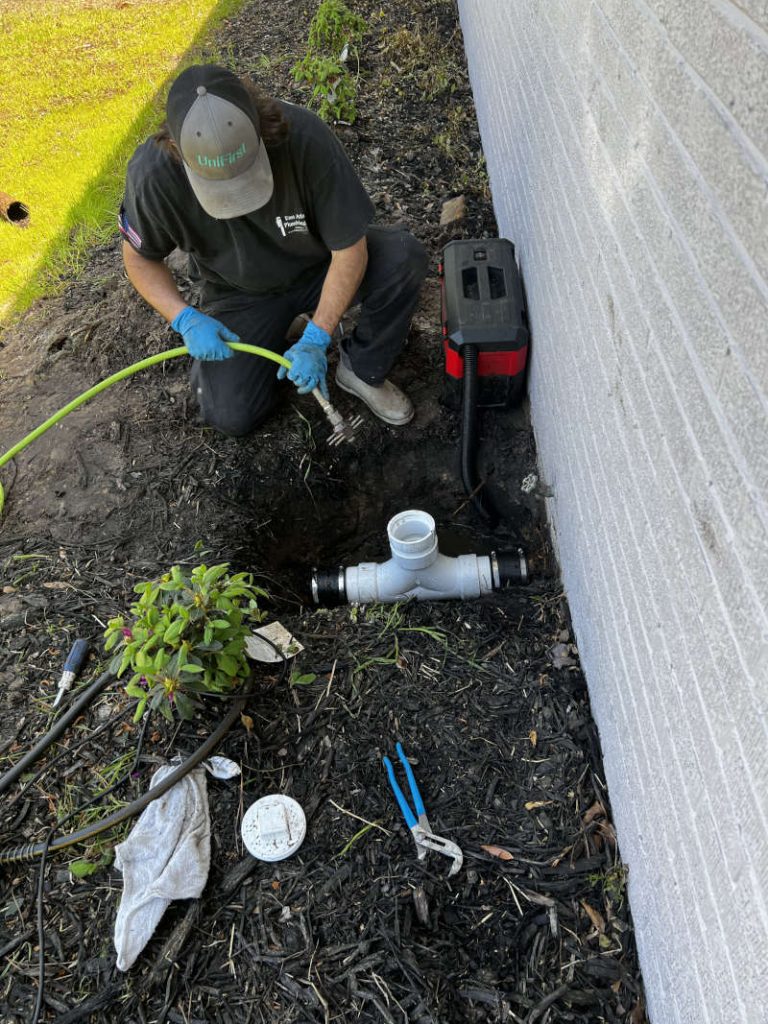
See our hydro-jetting service and our guide on what to expect during hydro-jetting.
Side by side
| Drain snake (cabling) | Hydro-jetting | |
|---|---|---|
| How it works | Rotating cable breaks into or pulls out a clog | High-pressure water scours the pipe walls |
| Best for | Localized clogs in sinks, tubs and smaller lines | Heavy buildup, grease, roots, recurring clogs |
| What it leaves behind | May leave some debris on pipe walls | Scours buildup off the pipe walls |
| Preventive use | Less common | Often used for preventive cleaning |
Why a camera inspection helps
If a clog keeps coming back, guessing is expensive. A plumbing camera inspection lets us see what is inside the line: buildup, tree roots, a damaged or offset section, or something else. That tells us whether a snake, hydro-jetting or a repair is the right answer. Learn more about plumbing camera inspections.
Preventive cleaning
You do not have to wait for a full blockage. If your drains are moving more slowly across the whole house, that can point to a problem in the main sewer line that should be dealt with before a backup happens. Our hydro-jetting guide recommends cleaning annually for businesses and every two to three years for homes, though the right schedule depends on your property and how your drains are used.
A few habits that help
- Keep grease and cooking fat out of drains.
- Do not flush wipes, paper towels or other items that are not meant for toilets.
- Use drain screens to catch hair.
- Be careful with chemical drain cleaners. The corrosive chemicals in them can erode pipes.
Which one do you need?
If the clog is a one-time problem in a single fixture, a snake may be all you need. If it is recurring, if it affects multiple drains, or if it is a sewer line, hydro-jetting after a camera inspection is often the better route. One customer review on our website describes a crew that snaked a pipe 100 feet, used a camera, checked the crawlspace for old pipes and cleared the clog. We will tell you honestly which one fits your drain.
If the problem turns out to be bigger than a clog, such as a damaged line, learn about sewer drain cleaning and our sewer line repair services.
We clear drains in Wilmington, Leland, Castle Hayne and Hampstead.
Frequently asked questions
Is hydro-jetting better than snaking?
For heavy buildup, grease, roots and recurring clogs, hydro-jetting is often the more thorough option. For a simple, localized clog, a snake can do the job. We recommend the method that fits your situation.
Can hydro-jetting remove tree roots?
Yes. Today hydro-jetting can be used to cut back tree roots in a sewer line.
How often should drains be jetted?
Our guide on what to expect during hydro-jetting recommends annually for businesses and every two to three years for homes. The right schedule depends on your property and how your drains are used.
Does a camera inspection come with jetting?
Our process uses a camera before jetting to find the blockage and problem areas, and again afterward to confirm the line is clear. Call (910) 616-3238 and we will tell you how that applies to your job.
Do you offer drain cleaning for businesses?
Yes. We provide commercial drain cleaning as well as residential drain cleaning.
Dealing with a stubborn clog?
Call East Atlantic Plumbing at (910) 616-3238. For urgent backups we are available 24/7. You can also contact us online.